Software Testing Articles & Tutorials: Load Testing, Unit Testing, Functional Testing, Performance Testing, Agile Testing, DevOps
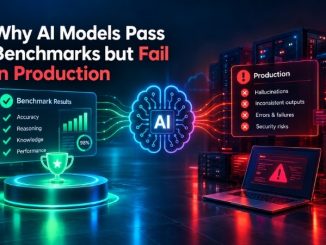
There are many cases where AI models that worked fine in development start to behave badly in production. In this article, Kanika Vatsyayan discusses the causes that lead to this situation. He recommends moving from static assessments to continuous quality engineering for AI models.
Random-matching video chat looks simple from the outside: press a button, meet a stranger, press it again. Underneath, every session needs a queue, a pairing decision, a signaling exchange, an ICE (Interactive Connectivity Establishment) negotiation and a media path that survives whatever network each person happens to be on. Each hand-off between those stages is a place for a defect to hide.
Paulius Pazdrazdys, a longtime observer of automated consumer-facing tech platforms, sees a clear pattern in how consequential automation tends to land in practice. Autonomous Engineer, ServiceNow’s newly announced offering, encodes that pattern directly: the system executes autonomous planning, building, and testing of implementation work, yet developers retain control of critical decisions before anything reaches production.
Software testing moves fast. One day you’re mastering a new automation framework. The next? You’re deep in the weeds of complex API status codes or security concepts, staring at a terminal screen late into the evening.
Duplicate delivery is normal in a distributed wallet system. A provider can send a wager, receive no response and send it again even though the first request has already reached the database.
When you add new code to your applications, it is associated to the test scripts that should validate it. Do you give enough importance to these tests? In this article, Eli Lopian explains that when pull requests are opened, you should review the tests scripts as much as the code.
Stop shipping browser bugs when you update your WordPress website. This article explains how to set up Playwright automated tests for WordPress, from saved logins to continuous integration, before the next update.